What does “Wasa Bothal” mean?
See the difference between dictionary meaning, romanized spelling and how Sri Lankan shops actually use the term.

Why is this phrase showing up in Sri Lankan search? What did the 2026 rules actually change? And what should you check before choosing a reusable bottle? Start with evidence — not fear, and not the shopping cart.
Start with your intent
The phrase sits at the intersection of language, policy, safety and shopping. Treating every search as “buy a glass bottle” is too narrow.
See the difference between dictionary meaning, romanized spelling and how Sri Lankan shops actually use the term.
Follow the verified policy timeline, then see our clearly labelled interpretation of how that context may shape search demand.
Understand what SLS 1616 and SLS 1306 cover, and what the cited rules do not automatically imply.
Identify the bottle category, verify applicable requirements, inspect the actual product and match it to the real use case.
Compare glass, stainless steel and reusable plastic by weight, breakage, cleaning, temperature needs and regulatory scope.
Go straight to the Sri Lankan Government Gazette, SLSI and Public Administration source records behind our explainers.
Why the old framing was too narrow
Local marketplace evidence shows the phrase being attached to more than one reusable material. The stronger product question is not “which material should we promote?” but “what does this user need to understand, verify and check before choosing?”
2026 policy snapshot
The CAA direction covers specified reusable plastic drinking bottles and polymer feeding bottles; the government information service states the requirements take effect from 1 April 2026.
Public Administration circulars address single-use plastic and environmentally preferable procurement inside government institutions. That scope should not be generalized into a nationwide consumer ban.
Safety layer
Know whether you are looking at reusable plastic, polymer feeding bottle, glass, steel or a single-use packaged-water bottle.
Check which standard or inspection path actually applies to that category. Do not transfer SLS 1616 to materials it does not cover.
Look at the actual bottle, closure, visible condition, product information and manufacturer limits.
Match the product to the user: children, babies, hot drinks, commute, office and bulk programmes have different risk profiles.
After the safety check
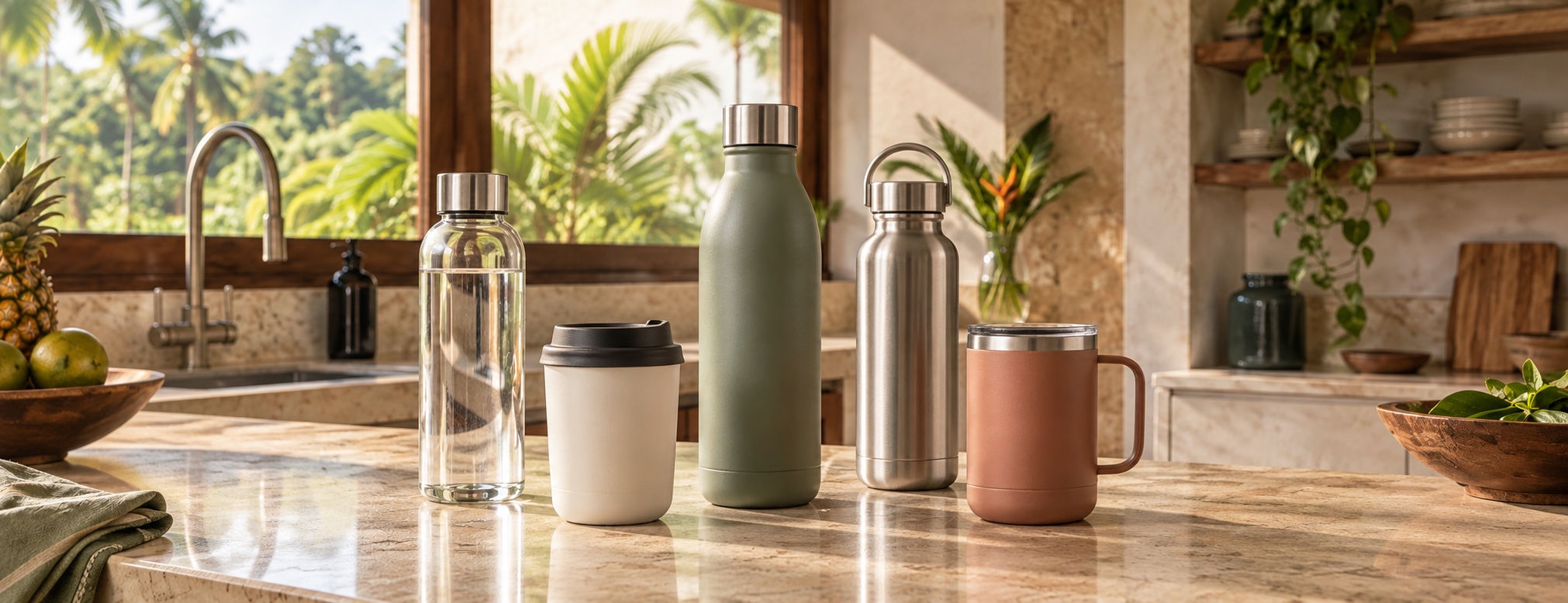
Useful in fixed settings where visibility matters. Heavier and breakable; outside SLS 1616 does not mean officially safer.
Useful where impact resistance and portability matter. Verify the actual grade, construction, lid and product claims.
Lightweight and practical in some use cases. For categories covered by the 2026 direction, check the relevant certification requirements.
Commercial layer
Bulk sourcing belongs at the end of the path: define the use case, verify the requirements, choose the specification, sample where practical, then source.
Quick answers
That is the job of WasaBothal.com before any purchase recommendation.